
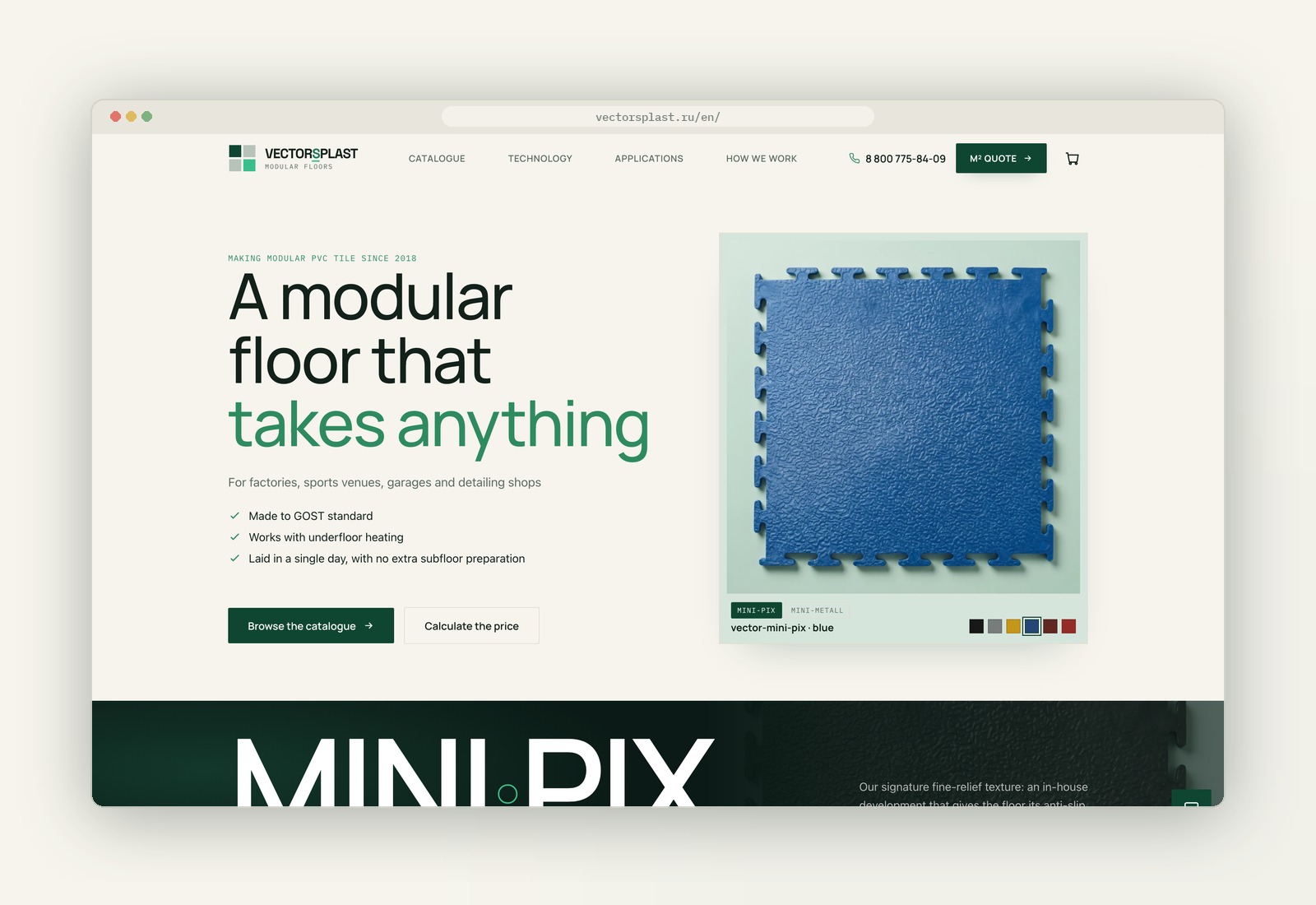
The brief
A manufacturer with its own factory, its own textures and no online sales channel. Buyers think in square metres of floor; WooCommerce thinks in units.
- A product priced per m², bought by people who know their floor area, not a box count
- One tile, six colours, three price tiers — without a confusing variant matrix
- Retail buyers and companies that can only pay against an invoice, in one checkout
- Freight carriers that quote the delivery price only after the order is placed
- A catalogue the client can extend from the WordPress admin, with no developer
What I built
A custom WooCommerce theme, written by hand. Every commerce decision — price, area, payment, freight — is a theme component rather than a stack of plugins.
- Custom WooCommerce theme written from scratch — no page builder, no bought template
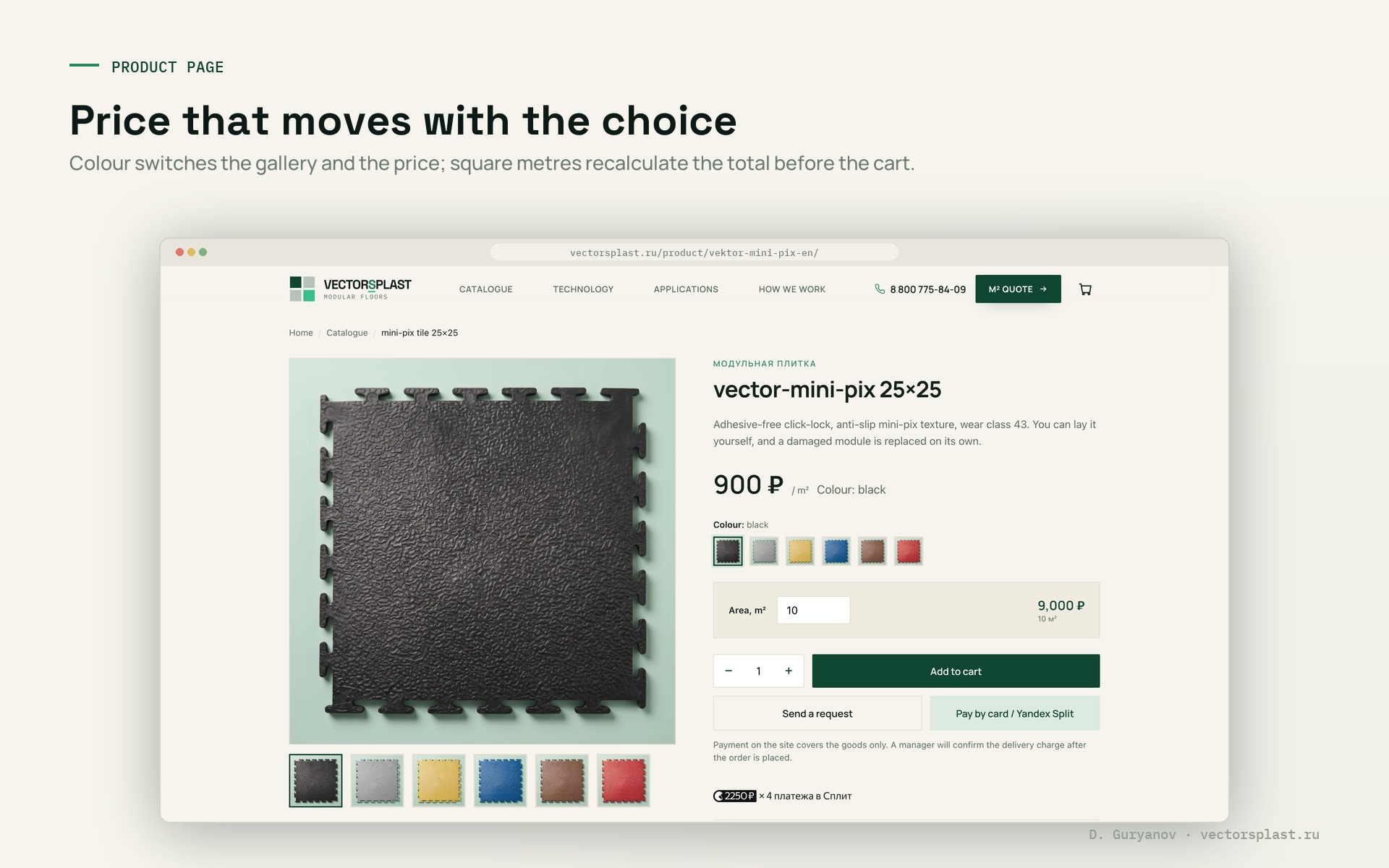
- Product card where colour swaps the gallery and the price, and m² become a live total
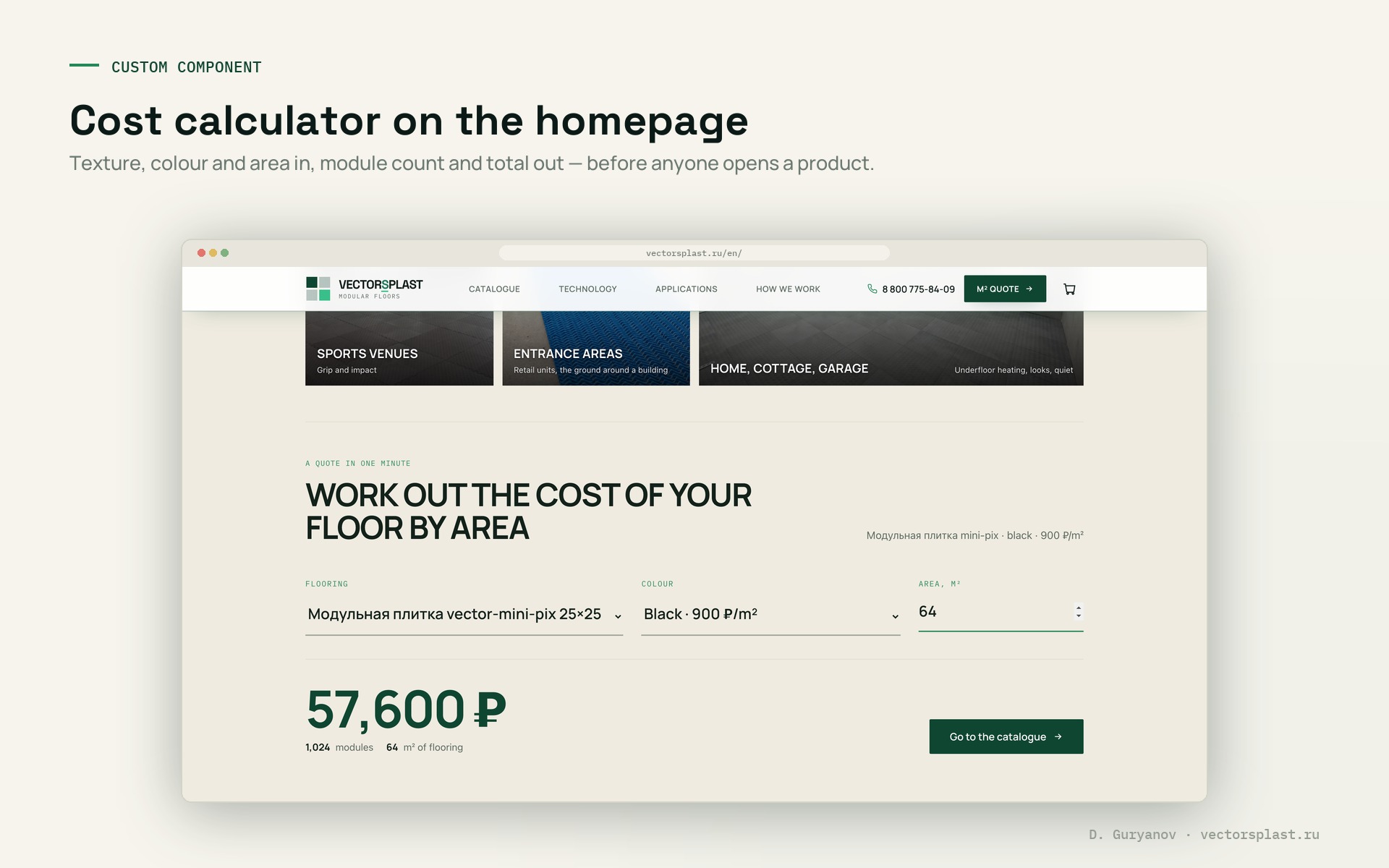
- Homepage area calculator: texture, colour and area in, modules and cost out
- Catalogue filtered by flooring type, colour, intended use and thickness
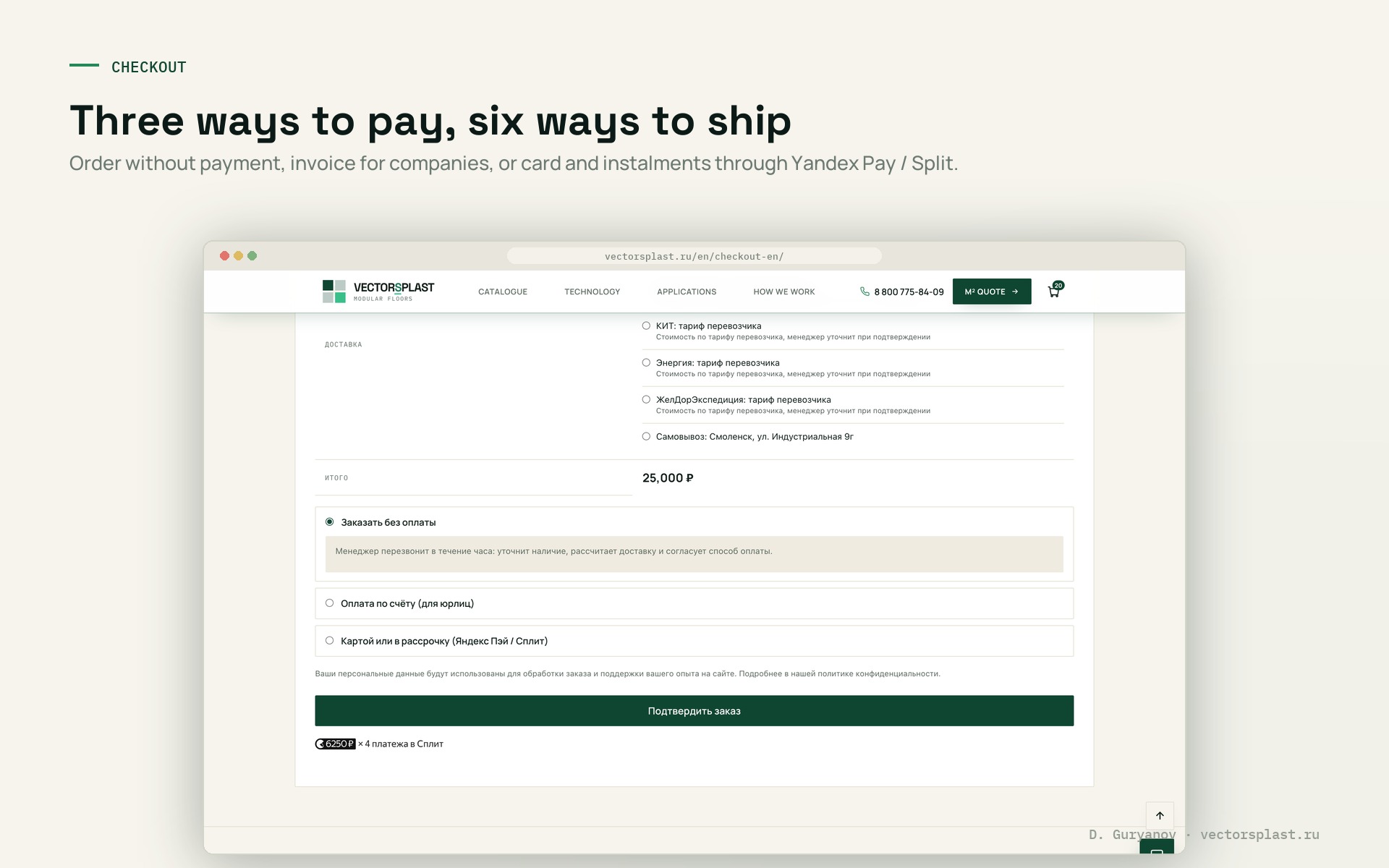
- Three payment paths, six freight carriers plus warehouse pickup
- Yandex Pay / Split wired through the theme, instalments shown on the product card
Product card
Six colours sit in three price tiers, so a variant matrix would have meant six SKUs and a dropdown. Instead one product carries the colours: picking one swaps the gallery, the price per m² and the instalment figure at once, all client-side.
Area calculator
Buyers arrive knowing their floor, not their box count. The calculator sits on the homepage before any product page: texture, colour and area in — module count and total out. The same logic runs again inside the product card.
Checkout
Three payment paths in one checkout: order without payment and a manager calls back within the hour, an invoice for companies, or card and four instalments through Yandex Pay / Split. The Split amount is calculated and shown before the buyer commits.
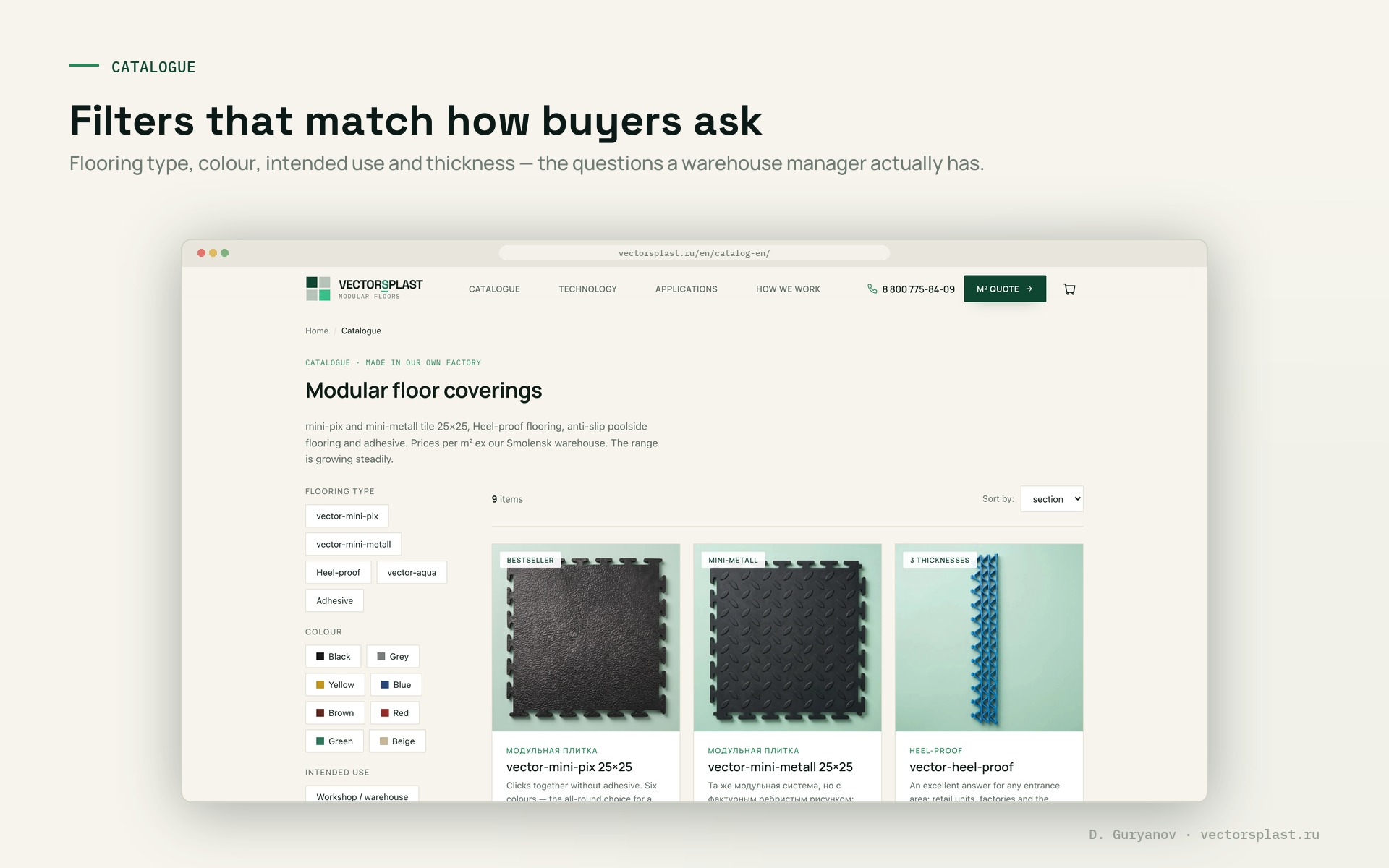
Catalogue
Filters follow the way a warehouse manager asks: flooring type, colour, intended use, thickness. Products come from WooCommerce, so the client extends the catalogue from the WordPress admin without touching code.
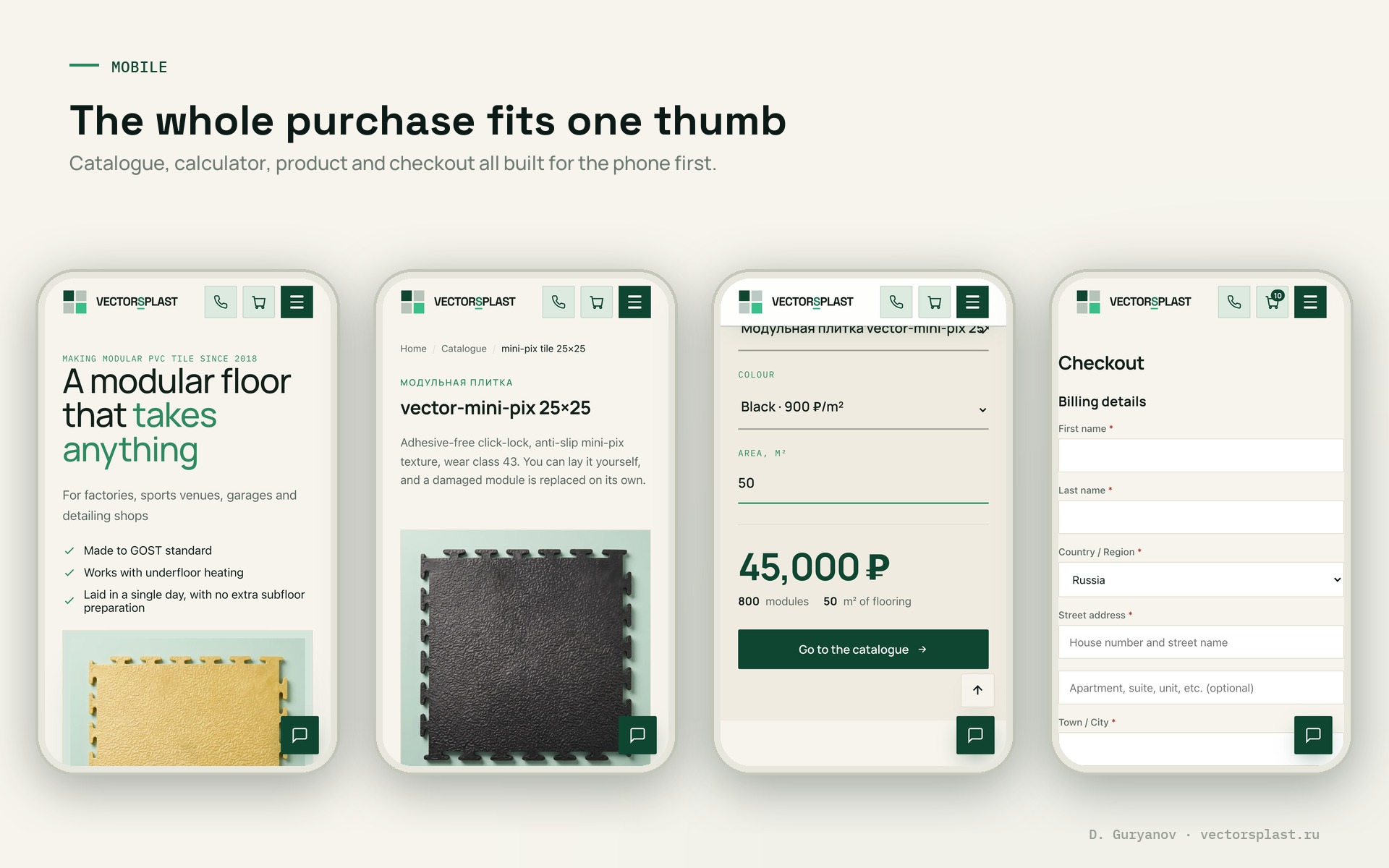
Mobile
Everything — catalogue, calculator, product card, checkout — is laid out for the phone first, with a persistent call and cart bar in the header.
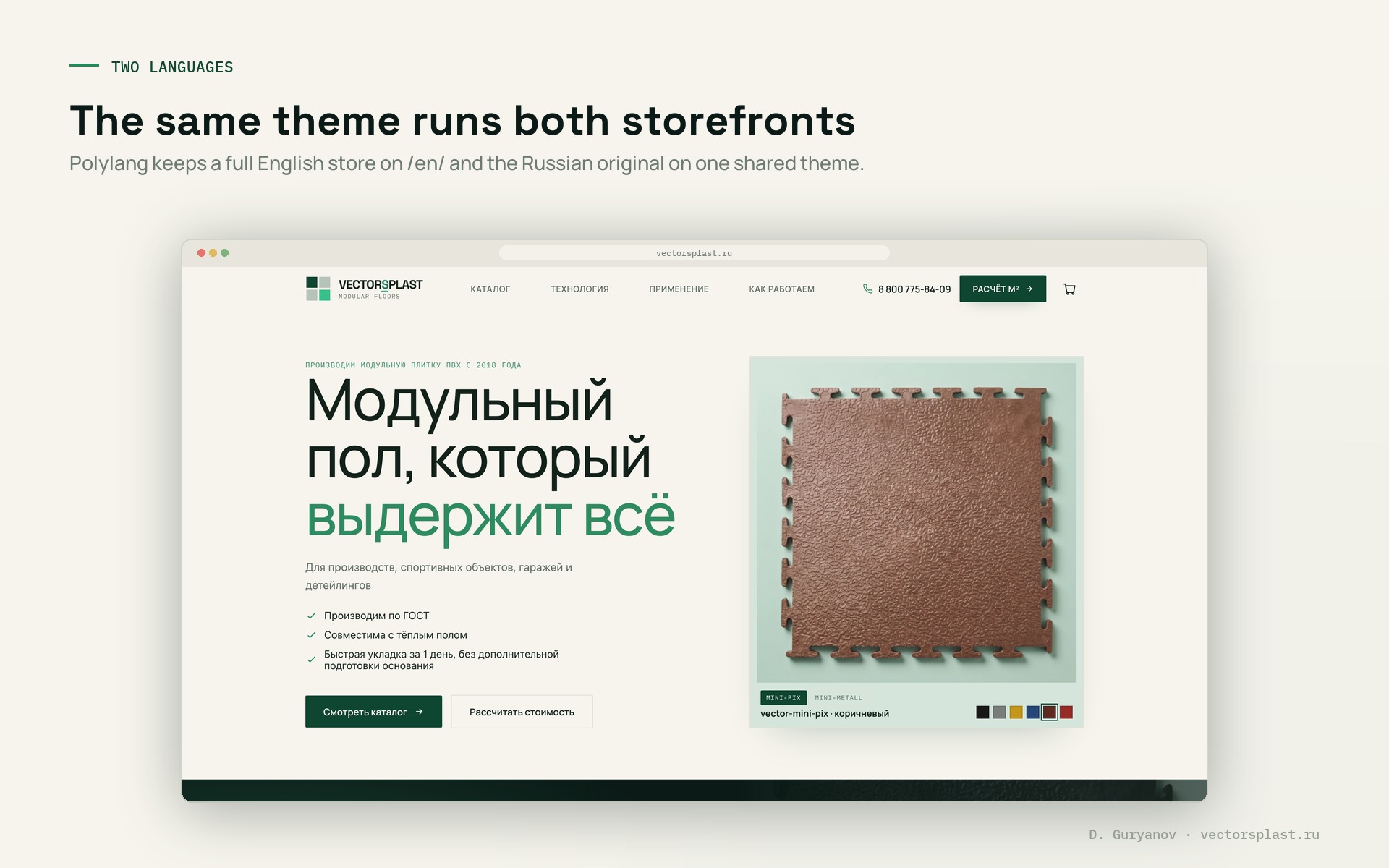
Two languages
Polylang runs two complete storefronts on one theme — catalogue, product cards, calculator and checkout all exist in both, each with its own copy and metadata.
What the client got
- The plant sells directly online for the first time, with no intermediary
- Buyers see a price for their actual floor area before reaching the cart
- Companies order against an invoice; retail buyers can split it into four payments
- Freight, pickup and callback are all handled inside one checkout
- The catalogue grows from the WordPress admin without touching code
- A full English storefront opens the same product to buyers abroad